How To Jump Start A Dead Battery For 4th Of July T
There is nothing worse than turning the key in the ignition on the 4th of July and hearing that dreadful clicking sound of a dead battery. After thirty years under the hood, I've seen too many holiday road trips ruined by drained batteries left sitting in hot airport parking lots or drained by aftermarket dash accessories. Whether you are driving a heavy-duty Ford F-150 or a daily-driver Honda Civic, knowing how to safely jump a battery is non-negotiable roadside knowledge.
Quick Answer
To jump-start a dead battery, park a running donor vehicle close enough for your jumper cables to reach, but ensure the cars aren't touching. Connect the red (positive) clamp to the dead battery's positive terminal, then the other red clamp to the donor battery's positive terminal. Attach the black (negative) clamp to the donor battery's negative terminal, and the final black clamp to an unpainted metal ground on the dead car's engine block—never the dead battery itself. Start the donor vehicle, wait two minutes, and crank the dead engine.
Table of Contents
What You Need Before You Pop the Hood
Before you even think about opening the hood, take a look at the physical battery. If the plastic case is bulging or you smell rotten eggs, back away. That battery is off-gassing hydrogen and attempting to jump it could cause an explosion. This happens frequently in the peak heat of July, especially on older OEM batteries that have seen better days. If it looks structurally sound, check for heavy corrosion on the terminals. Sometimes a no-start condition isn't a dead battery, but a bad ground connection.
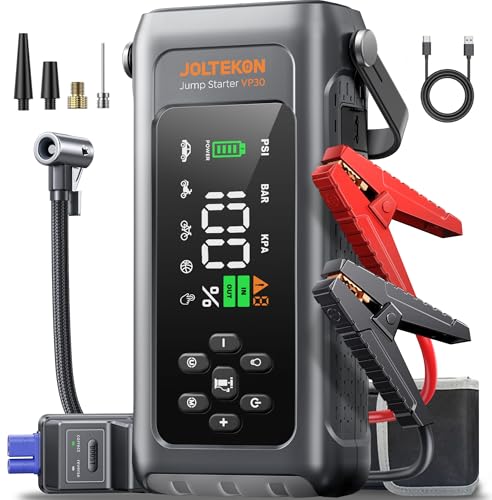
Next, assess your tools. You need a set of heavy-gauge jumper cables—nothing under 6-gauge if you're jumping a truck or a large SUV. Those cheap 10-gauge cables they sell at the checkout counter will heat up, drop voltage, and leave you stranded. If you rely on a modern lithium-ion jump starter pack instead of cables, ensure it is actually charged. These units are fantastic to keep next to your trunk organizer, but they do you zero good if you didn't top off the battery at home.
Step-by-Step: The Proper Way to Hook Up Jumper Cables
Position the donor vehicle so the batteries are as close as possible without the bumpers touching. Turn off both vehicles, put them in Park (or Neutral for manuals), and set the parking brakes. Open both hoods and locate the positive (+) and negative (-) terminals. Clean off any dry, flaky corrosion with a rag or a wire brush if you carry one in your car cleaning kits.
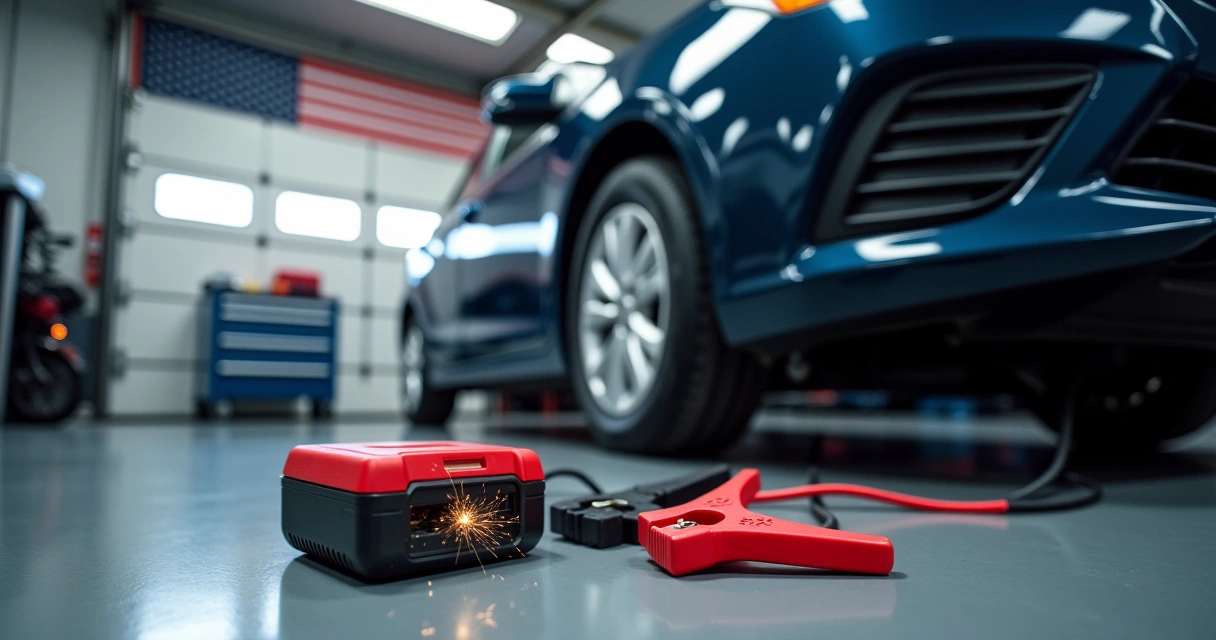
The connection sequence is critical to prevent sparks near the battery. Follow this exact order: Red to Dead (positive clamp to dead positive terminal). Red to Donor (positive clamp to good positive terminal). Black to Donor (negative clamp to good negative terminal). Finally, Black to Ground. That last negative clamp must go to a solid, unpainted metal part of the dead car's engine block or chassis. Connecting it directly to the dead battery's negative terminal creates a spark risk right next to potential battery gases.
Once everything is clamped tight, start the donor car. Let it idle for two to three minutes so the alternator pushes a surface charge into the dead battery. Rev the donor engine slightly to about 2,000 RPM, then attempt to start the dead vehicle. If it cranks slowly, wait another three minutes before trying again. Once it fires up, remove the cables in the exact reverse order: remove the ground from the jumped car, then the donor negative, the donor positive, and finally the positive from the jumped car.
Going Solo: How to Use a Portable Jump Starter Pack
If you are traveling solo or don't want to rely on the kindness of strangers, a portable lithium jump starter is worth its weight in gold. These compact boxes connect directly to your battery without a second car. As a mechanic, I prefer these over traditional cables for most daily-driven sedans, crossovers, and even half-ton trucks. They are reliable, safe, and eliminate the voltage drop you get through cheap cables.
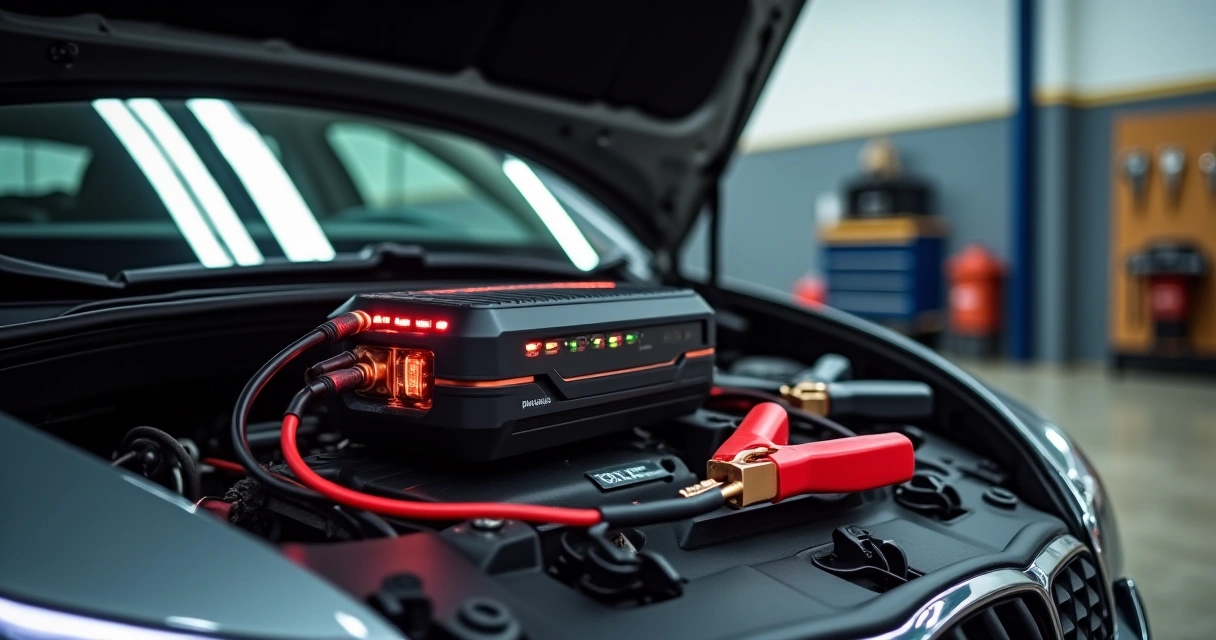
Using one is straightforward. Plug the booster clamps into the jump pack, ensuring the unit is turned on. Connect the red clamp to the battery's positive terminal and the black clamp to the negative terminal. Wait about 15 seconds for the pack to analyze the battery condition—most modern units have fault alarms that sound if you hook them up backward. Once the pack gives you a solid green light, turn the key (or push the start button). Disconnect it immediately once the engine is running.
Post-Jump Protocol: What to Do Next
Getting the engine running is only half the battle; you need to know the actual state of your vehicle's electrical system. Immediately check your dash accessories. If your headlights are flickering, your car phone mounts are vibrating from a rough idle, or the blower motor sounds weak, your alternator might be failing to carry the load. At idle, your alternator should be pushing out around 13.8 to 14.4 volts.
To test this without a mechanic, simply turn on your high beams and the air conditioning. If the car tries to stall or the dash lights go dim, your alternator is likely bad, and you are running purely off the battery—which will die again very soon. If everything runs smoothly, take the car for a 20-minute drive at highway speeds to let the alternator properly recharge the battery.
How to Actually Prevent a Dead Battery Before Your Trip
Preventative maintenance is the best roadside assistance money can't buy. Before you pack the cooler and load the trunk, do a visual inspection of the battery terminals. If they are covered in a white, crusty powder, clean them with a mix of baking soda and water. A poor connection prevents the alternator from fully charging the battery during your daily commute. Ensure the battery hold-down clamp is tight. A battery bouncing around on rough roads will internally short itself over time.
You also need to be realistic about aftermarket electrical loads. Dash cameras, high-draw car chargers, and hardwired radar detectors pull parasitic draw even when the car is off. If your daily commute is only 15 minutes of stop-and-go traffic, the alternator never runs long enough to recover the energy used to start the car, let alone the power used by your electronics while parked. If you run heavy accessories, plug a multimeter into your OBD2 scanners port to monitor battery voltage, or look into a quality battery tender if the car sits unused for days at a time.
Frequently Asked Questions
Can jump-starting a car ruin the computer or ECU?
Yes, it can, if done carelessly. Crossing the cables (putting positive on negative) will instantly fry sensitive modules, especially on modern vehicles like Jeep Wranglers or Ford F-150s. Always double-check your polarity and never let the cable clamps touch each other while connected to a battery.
Does revving the engine of the donor car help charge the dead battery faster?
Moderate revving helps. It increases the alternator's output speed, pushing more amperage into the dead battery. Hold the RPMs around 1,500 to 2,000. However, don't floor it. Over-revving a cold engine under load can overheat the alternator or damage the donor vehicle.
How long should I let the jumped car run to recharge the battery?
Absolute minimum of 20 to 30 minutes of continuous driving at highway speeds is required to put a meaningful surface charge back into the battery. Idling in your driveway for five minutes will not cut it, as the alternator outputs very little amperage at low RPMs.
Why does my car keep needing a jump start?
If the battery dies repeatedly, you have a systemic issue. Either the battery has a dead cell and can no longer hold a charge, your alternator belt is slipping, or you have a parasitic draw draining the battery while the car sits overnight. Have the electrical system diagnosed professionally.
Are portable jump starters safe for all vehicles?
They are safe for most consumer vehicles, but you have to match the unit's power to the engine size. A compact 1,000-amp jump pack is plenty for a 4-cylinder Toyota Camry, but it might struggle or fail on a cold 6.2L V8 Chevrolet Silverado. Always check the displacement rating on the jump pack.
A dead battery shouldn't ruin your 4th of July weekend, provided you understand the proper connection sequence and know when a jump-start is a temporary fix versus a symptom of a bigger electrical problem. Protect your electrical system by using the right tools, cleaning your terminals, and driving the car long enough to actually rebuild a charge. For your next step, grab your OBD2 scanners and run a quick check on your vehicle's charging system health today, so you can pack the car with absolute confidence tomorrow.