

How to Choose the Right Jump Starters
Jump starters aren’t a gimmick—they’re a practical lifeline when a dead battery seizes your plans. In cold weather, in a dark garage, or on a remote road, a good jump starter gets you back behind the wheel faster than waiting for help. As a mechanic who’s seen both OEM service kits and top-tier aftermarket packs in action, I know what actually works when reliability matters and money is on the line.
Our Top Picks
Affiliate disclosure: if you buy through these links, we may earn a commission at no extra cost to you.


Choosing the right unit isn’t about chasing the most amps or the sleekest design. It’s about fitment to your vehicle size, battery chemistry, and the kind of use you expect. A compact sedan like a Toyota Camry benefits from a balanced pack, while a diesel pickup or a start-stop-heavy SUV like a Ford F-150 or Jeep Grand Cherokee needs a sturdier setup. This guide cuts through the hype and gives you practical, real-world criteria you can apply today.
GOOLOO A3 Jump Starter with Air Compressor, 3000A Portable Car Battery Booster (9.0 Gas/6.5L Diesel) with 150PSI Auto-Shutoff Tire Inflator, 12V Supersafe Lithium Jump Box Car Battery Jumper Starter
$69.99Check Price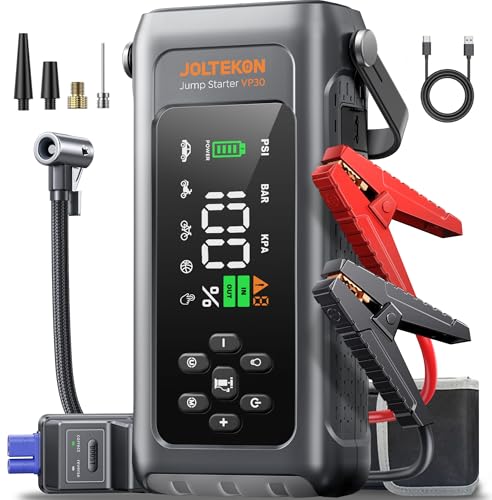
Table of Contents
Understanding Jump Starter Basics
A jump starter is a portable power pack that delivers a surge of current to a dead 12V lead-acid or lithium battery long enough to crank the engine. There are two main flavors: traditional lead-acid/AGM units that are heavier but very affordable, and lithium-based packs that are lighter, smaller, and often safer. Either way, the unit will quote peak amps and cranking amps (CA/CCA) and a capacity rating in amp-hours or milliamp-hours.
Know the distinction: peak amps are the maximum instantaneous current the pack can deliver, usually for a split second during the crank. Cranking amps (CA/CCA) is a more realistic gauge of what the unit can sustain through a full crank cycle at the indicated temperature. For most passenger cars, you’ll be fine with 400–700 CA; for large V8s, turbocharged engines, or diesels, plan for 1000+ peak amps or a higher CA rating.
Important caveat: most modern vehicles with start-stop technology or highly sealed start/stop batteries can be fussy. A jump starter that can’t deliver sustained current or that lacks proper safety interlocks may fail to crank or cause a protection fault on the car. If you own a diesel pickup or a big SUV like a Ford F-150 with a 3.5L EcoBoost or a Ram 2500 with a Cummins, you’ll need a more capable unit than a small 300–500 peak-amp box—usually 1000–1500 peak amps and robust clamps are the minimum you should consider.
Key Specs to Look For
Start with chemistry and core power figures. Lithium-based jump starters offer a higher energy density and can deliver big bursts of current in a compact package, but they’re more sensitive to abuse. AGM/sealed lead-acid packs are tougher in extreme cold and generally cheaper, but heavier and bulkier. Look for a unit that has both high peak amps and a realistic CA/CCA rating for your engine size.
Next, check the clamps, cables, and housing. The leads should be long enough to reach a battery mounted in deep engine bays, like in many Toyota and Honda layouts, and the clamps should be robust enough to grip both positive and negative terminals without slipping. A build-quality enclosure with a secure battery case reduces the risk of short circuits in a cramped engine bay. If you drive a Toyota Camry, Honda CR-V, or a Ford F-150, you’ll appreciate doubled cable length and solid clamps when you’re on the hook in cold weather.
Practical features matter nearly as much as raw amps. A built-in USB-C PD port can keep your phone charged while you deal with a dead battery, and a 12V air compressor is a nice-to-have for winter tire pressure checks. Safety features such as reverse-polarity protection, spark-proof design, and short-circuit protection aren’t optional—they’re essential for daily use. For a BMW 3 Series or Audi A4, you want a pack that won’t misbehave in an apartment parking lot when you’re trying to start a somewhat sensitive electrical system.
Fitment: Vehicle Types, Start-Stop, and OEM vs Aftermarket
Passenger cars with small to mid-size engines (think Honda Civic, Toyota Corolla, Toyota Camry) typically do well with 400–700 CA. A mid-size SUV like the Honda Pilot or Toyota 4Runner benefits from 600–1000 peak amps to ensure quick cranks even when the battery is under charging. Full-size trucks and diesels—Ford F-250 with a 6.7L Power Stroke or Ram 3500 with a 6.7L Cummins—demand more. Look for 1000–1500 peak amps and a cable lead long enough to reach the battery from the front bumper or under-hood space.
Start-stop systems add another wrinkle. Vehicles with aggressive battery management or 12V AGM banks can require a stronger burst of current or a unit that maintains voltage under heavy draw. A big, modern luxury car like a BMW 5 Series or Mercedes E-Class will often tolerate a jump starter, but you’ll need good clamps and a unit capable of delivering current without dropping the voltage. In practice, aim for a unit with at least 1000 peak amps if you own a modern European or heavier SUV.
OEM vs aftermarket quality matters. OEM service kits or dealer-sold jump packs tend to be built to a high standard and tested for compatibility with particular vehicles, but they’re rarely a budget option. Aftermarket units from reputable brands (Stanley, Clore, Tacklife, Anker/NOCO, etc.) can match or exceed OEM performance if you read specs carefully and consider real-world use, including battery chemistry, clamp design, and warranty. For example, a 2018 Buick Enclave or 2019 Jeep Wrangler with a heavy 6.4L engine will likely be better served by a well-reviewed 1000–1500 peak-amp unit rather than a tiny 400–600 amp box.
Features, Safety, and Real-World Use
A practical jump starter is more than raw amps. Look for a unit with a robust set of safety features: reverse-polarity protection (so you won’t damage your battery if you grab the clamps the wrong way), spark-proof connections, over-current protection, and proper insulation on the clamps. If you park in a snowy climate near an open street, a bright LED work light on the unit can save you from fumbling around in the dark. For a Ford F-150 owner, a built-in air compressor can be the difference between a flat tire and a quick on-site tire check on a long road trip.
Power outlets are another practical consideration. A unit with dual USB ports (including USB-C) is handy for charging phones or running a small dash cam while you work. If you spend long periods in your vehicle during camping trips, a 12V or USB-C port that remains powered during jump-start events is a nice-to-have feature. Finally, check the build quality and age of the battery pack—cheaper boxes may fail after a few dozen cycles, especially in cold weather or high-heat climates.
Real-world usage matters. If you own a compact sedan like a Honda Civic or a Toyota Corolla, a compact lithium pack with 600–800 peak amps will typically cover most dead-battery events, including winter starts. For a used 4.0L Toyota 4Runner or a Ford F-250 in a rural area, you’ll want something beefier with longer life and more robust clamps. In practice, buy the biggest practical pack you can comfortably store in your glove box or trunk without making your car look bulky or compromising cabin space.
Maintenance, Safety, and Longevity
Keep your jump starter charged and stored in a cool, dry place. Lithium packs deteriorate with temperature swings; aim for storage around room temperature and top them off every 2–3 months if you aren’t using them. AGM packs tolerate heat somewhat better but can fail if they sit discharged for long periods. Avoid leaving a charger attached to a jump starter as this can reduce the lifespan of the internal cells.
Regularly inspect the clamps and cables for cracks or corrosion. If the copper bends or the insulation on the leads is damaged, retire that unit and replace it. Test your unit once a season by connecting it to a dead battery in a safe, controlled environment to gauge performance. Finally, consider marking the unit’s warranty card and register it online so you’ll know exactly what coverage you have if something goes wrong.
In practice, a well-built jump starter is a long-term investment. For a typical daily-driver like a Toyota Camry or Honda Accord, a mid-range 600–800 peak-amp lithium pack with a long cable and a couple of USB outputs will serve for several years if treated right. For a diesel truck or a start-stop-heavy vehicle like a Jeep Wrangler or a Ford F-250, invest in higher peak amps and a proven safety track record to avoid repeated failures and towing costs.
Frequently Asked Questions
Can a jump starter start my car if the battery is completely dead?
Yes. A jump starter provides a high-current burst to crank the engine. If the battery is damaged beyond a small recharge or the alternator is dead, you may still need professional assistance, but for a typical dead battery, a good jump starter should do the job.
Will a jump starter work on a diesel or a start-stop vehicle?
Most can, but you’ll want a higher peak-amp unit (1000–1500+) for diesels and vehicles with aggressive start-stop systems. Check the vehicle’s service manual for recommended amperage and ensure the unit’s clamps and cables are robust enough for the job.
What’s the difference between lithium and AGM jump starters?
Lithium packs are lighter and can deliver higher peak power, but can be more sensitive to heat and require careful charging. AGM packs are heavier but tend to be tougher in extreme cold and are often cheaper. Either can be suitable if they meet your amp requirements and safety standards.
Are jump starters safe to use on all vehicles?
Most vehicles with a 12V lead-acid or AGM battery are compatible. Do not use jump starters on pure electric vehicles or vehicles with dedicated 12V battery management systems unless the unit is explicitly rated for that use. Always follow the manufacturer’s instructions and connect in the correct polarity.
How long does it take to recharge a jump starter after use?
Recharge time depends on the pack’s capacity and charger input. A typical 1000–1500 peak-amp unit with a 20V charger takes several hours to fully recharge. If you rely on it often, keep it plugged into a wall charger when not in use and check the charge level before heading out.
Do OEM jump starters exist as factory options?
Some manufacturers offer integrated battery management or dealer-installed jump kits as part of service packages, but they’re not universally available. In most cases, a high-quality aftermarket jump starter from a reputable brand is the practical choice for most owners.
Conclusion: Choose a jump starter that matches your engine size, weather conditions, and daily driving patterns. Prioritize a model with robust clamps, sufficient lead length, and a safety feature set you can trust. When in doubt, go with a higher peak-amp unit from a reputable brand; it pays off in reliability and peace of mind, especially for family cars like the Toyota Camry, Honda Accord, or diesel trucks that see tough winter starts.


