

How to Choose the Right Car Covers
As an old-school mechanic who’s spent a lifetime washing, polishing, and backing cars out of a showroom, I know paint preservation hinges on more than wax. A good car cover is your first line of defense against sun, sap, dust, and incidental scrapes when you park outdoors or in shared lots. The wrong cover can do more harm than good: it can trap moisture, rub edges, or flap in the wind and scratch paint. Pick the right one, and you’re protecting the finish on a daily driver like a Toyota Camry, a mid-size SUV like a Honda CR-V, or a rugged pickup like a Ford F-150.
Our Top Picks
Affiliate disclosure: if you buy through these links, we may earn a commission at no extra cost to you.

In this guide, I’ll walk you through choosing the right cover with real-world fitment notes, material judgments, and how to assess value. We’ll reference common makes/models so you can picture what to buy for a Honda Civic, Toyota Camry, Ford F-150, or Jeep Wrangler. No fluff, just practical, money-efficient guidance that actually keeps your ride looking sharp.
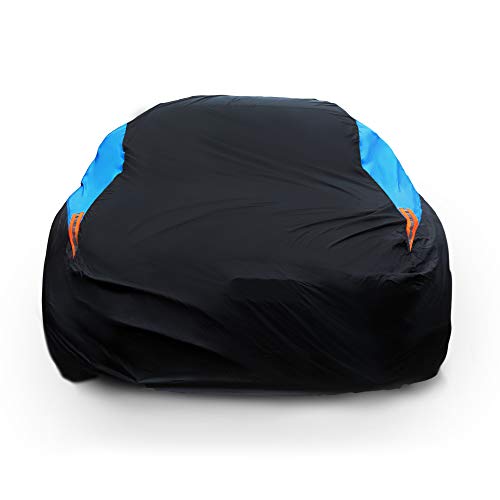
GUNHYI Car Cover for Automobiles All Weather Waterproof, Universal Fit Sedan Porsche 911, Toyota Corolla/Prius, Honda Civic, Subaru Impreza/WRX, Chevy Cruze, Nissan Sentra, Acura RDX etc.
$39.96Check Price
Table of Contents
Car Cover Types and Fitment Basics
There are indoor dust covers, outdoor all-weather covers, and “all-season” fabrics that fall somewhere in between. Indoor covers are typically soft, breathable fabrics that protect against dust and minor scratches but don’t seal out moisture. Outdoor/All-Weather covers use a waterproof or water-resistant shell with a soft inner lining to prevent paint-contact abrasion. The key is choosing a fabric that matches your climate and how you park (garage, driveway, street) and ensuring the cover is actually sized for your model.
For a modern sedan like a 2019 Honda Civic or a 2021 Toyota Camry, a custom-fit or semi-custom cover with mirror pockets and antenna grommets will sit snug and reduce wind flapping. For a daily driver that sits outside in a snow-prone location, a heavier, double-layer or laminated shell with a vent system helps prevent condensation. For rugged trucks like a 2018 Ford F-150 or a Jeep Wrangler, look for reinforced corners and thicker undercoating to resist tree sap and gravel spray on gravel lots. In all cases, OEM-pattern or brand-pattern covers that claim a “form-fit” are preferable to generic universals if you want consistent protection.
Custom-Fit vs. Universal: Size and Fit You Can Trust
Fitment is the most overlooked detail. A loosely fitting cover can rub paint, especially along door handles, mirrors, and badging. Custom-fit covers are designed from factory CAD data or manufacturer templates for specific models—think Toyota Camry LE, Honda Civic sedan, or Ford F-150 SuperCrew. Universal covers, while cheaper, tend to be droopy on larger sedans or tight on compact cars, leading to fluttering in wind and edge wear over weeks.
When selecting size, start with your exact year, make, and model. If you own a 2017 Toyota Camry XLE, confirm a “Camry 2015-2020” pattern rather than a generic “Camry” one-size-fits-all. If you drive a compact like a 2020 Honda Civic, check for a “Civic 2016-2021” cut. If your vehicle has a high posten on the hood or a wide fender crease (think RAM pickup or Jeep Wrangler), verify that the cover’s hood-to-cargo area isn’t undersized. Also review whether the cover includes: - Mirror pockets for folding in side mirrors - Antenna pockets or freestanding antenna compatibility - Large body creases for SUVs and trucks with taller rooflines
Practical tip: measure your car from bumper to bumper and from ground to the highest point, compare to the manufacturer’s listing, and look for a cover that lists those same dimensions. A fit that’s off by more than a few inches will wrap around mirrors and create pressure points that wear paint.
Weather, Climate, and Material Choice
Climate dictates fabric. In sunny regions (think Southern California or Arizona), UV resistance and heat resistance matter most. In wet climates (Pacific Northwest, Pacific Southwest), waterproofing and breathability are critical to avoid trapped moisture. In freezing areas (Midwest winters, Great Lakes), insulation against wind-driven cold and snow is valuable. The right material balances water resistance, breathability, and scratch protection.
Typical options include: - Breathable non-woven polyester or polypropylene for dust and light rain - Waterproof laminated shells for heavy rain and snow - Fleece-lined interiors to minimize paint abrasion on sensitive finishes - Microfiber or satin interiors for premium scratch protection on clearcoat and trims
For a daily driver such as a Toyota Corolla or Honda Accord kept in a garage with periodic outdoor exposure, an all-weather cover with a breathable membrane often hits the best balance between protection and ease of use. For a high-end show car or a classic with delicate paint, a soft-satin interior with an optional breathable vent is worth the extra cost. And for winter-only storage of a winter beater or a secondary vehicle, a heavy-duty waterproof shell can keep salt and ice off the finish while you’re not using the car.
Care, Maintenance, and Interaction with Other Gear
Maintenance is simple but essential. After removing a cover, shake out dust and let it dry if damp. Most covers survive machine washing, but follow the care label. Gentle cycles with mild detergent and air-drying are safest for inner linings. Never machine-dry a cover with a thick inner fleece; high heat can degrade the fabric and reduce water resistance over time.
Storage matters. Fold and store in a breathable bag to avoid mold. If your garage is dusty or full of power tools, storing the cover in a dedicated bag helps keep the fabric clean for the next use. Consider how your interior gear interacts with the cover: if you run a car cleaning kit or a car vacuum cleaner in the driveway, make sure the cover isn’t in the path of the hose or the vacuum’s power cord, which can cause snagging or tears.
When you pair a car cover with interior protection (floor mats, seat covers) and exterior add-ons (car phone mounts on the dash or windshield, dash accessories like a GPS mount), ensure none of these interfere with the cover’s edges or the mirror pockets. A cover should not press against glossy sensors or interfere with antennae or defrosters during cold climates.
OEM vs Aftermarket: What Really Delivers Value
OEM car covers are uncommon but do exist for some high-end or specialty vehicles. In most cases, aftermarket options provide better value, broader fitment, and more material choices. The key is to pick a reputable brand that offers a precise fit for your model and climate. Brands like Covercraft and WeatherTech, as well as other established manufacturers, typically offer custom-fit patterns for popular vehicles such as the Toyota Camry, Honda Civic, Ford F-150, and Jeep Wrangler. They also provide pattern-specific mirror pockets and cutouts that prevent misalignment and edge wear.
When comparing OEM vs aftermarket, you’re paying for fit, fabric quality, and warranty. OEM covers typically come with a factory warranty and a guarantee of pattern accuracy but can be expensive and limited to specific trims. Aftermarket options often provide more material choices (polypropylene, laminated fabrics, breathable membranes) and better price-to-performance ratios. If you drive a modern daily with a duty cycle of year-round parking, a mid-range all-weather cover from a reputable maker often beats a factory option on both price and longevity.
To maximize value, match the fabric with your climate and usage: a mid-tier all-weather cover with a good vent system for a Toyota RAV4 in Seattle, or a heavy-duty interior-backed cover for a Ram 1500 used in construction zones. Look for reinforced seams, double-stitched hems, and a secure strap system to protect against wind. If you frequently park in areas with tree sap or industrial fallout, consider a thicker shell with a soft inner layer to minimize surface rubbing on your paint and trim.
Frequently Asked Questions
Do I need an indoor or outdoor car cover?
Indoor covers are fine for dust and light surface protection in a dry garage. Outdoor covers should be breathable and weather-resistant, with a secure strap system and venting to prevent moisture buildup.
How do I know what size or pattern I need for my car?
Use the exact year, make, and model and check the manufacturer’s size chart. If you have unusual features (roof racks, spoilers, or aftermarket mirrors), look for a pattern that explicitly lists those options.
Will a car cover scratch my paint?
Only if the fabric is dirty, damp, or misfitting. A clean, soft inner liner and a properly fitted cover reduce the risk. Avoid using a cover on a dirty car or in gale-force winds—wash and dry first, then fit securely.
How do I secure a cover in windy conditions?
Choose a cover with a reliable strap system and mirrored pockets. Use additional bungee cords or tie-downs if needed, and remove the cover if sustained winds exceed the manufacturer’s guidance.
Are OEM covers worth it compared to aftermarket?
OEM covers are reliable for a precise fit on certain models but often cost more and are less flexible. Aftermarket patterns usually deliver better price-to-performance and more material options, as long as you choose a reputable brand with a proven fit for your vehicle.
Can a car cover interfere with other gear like car phone mounts or dash accessories?
Not if you choose a pattern that accommodates mirrors and antennae and you avoid placing accessories where the cover sits. Most patterns leave space around dash attachments and won’t press on edge surfaces if you test-fit first.
Conclusion and next step: a car cover is not a luxury—it’s a maintenance tool that pays for itself by extending your finish’s life and reducing detailing needs. Start with a model that matches your vehicle’s year, make, and pattern, pick a fabric appropriate for your climate, and verify fitment around mirrors and roof accessories. If you’re unsure, ask the retailer for a model-specific fit chart or consult a shop that can verify pattern accuracy for your car—whether it’s a 2015 Toyota Camry or a 2022 Jeep Wrangler Rubicon.
Next step: identify your vehicle’s climate and parking conditions, choose a model-year-specific cover from a reputable brand, and test-fit in your garage before exposing it to rain or snow. Your paint will thank you a year from now.
Frequently Asked Questions
What’s the difference between a breathable and a waterproof cover?
A breathable cover resists water but allows moisture to escape, reducing condensation. A fully waterproof cover blocks water entirely but can trap moisture if there’s inner humidity. For long outdoor storage in wet climates, a breathable waterproof option is ideal.
Can I use a car cover on a car with a car alarm or immobilizer?
Yes, car covers don’t interact with alarms. Ensure the cover doesn’t cover sensors or remote entries; if it does, choose a pattern with proper sensor cutouts or remove the cover when arming the alarm.
How long should a car cover last?
Quality custom-fit covers can last 5–10 years with proper care. Cheaper universal covers may fail in 1–3 years due to seam wear or fabric breakdown. Inspect seams and fabric regularly and replace if the fabric starts to fray or the elastic frays.
Should I remove the cover during the day in hot climates?
If your car gets extremely hot, occasional removal can help avoid heat buildup under the cover, which can increase interior humidity. In most cases, a breathable cover will mitigate this, but check the manufacturer’s guidance for your fabric.
Do OEM covers offer a better fit for special edition cars?
Sometimes. For limited-production or highly customized models, OEM patterns may be the best fit, but aftermarket options from established brands often offer better materials and value while still providing precise fitment for most mainstream vehicles.
Conclusion: A well-chosen car cover is a straightforward, cost-effective protection strategy for paint, trim, and resale value. Start with a model-specific pattern, pick a climate-appropriate fabric, and verify fit around mirrors and roof accessories. The right cover keeps your finish looking showroom-clean between wash days, whether you drive a Honda Civic or a Ford F-150.


